Extrusion is a common plastic-processing method. It is used to produce films, pipes, sheets, profiles, cable coatings, woven tapes, and continuous filaments. Because production is continuous, small variations in material composition can quickly affect a large volume of finished products.
Masterbatch for extrusion is a concentrated mixture of pigments, mineral fillers, or functional additives dispersed in a polymer carrier. The performance of a masterbatch depends on more than its active ingredient content. Carrier compatibility, dispersion quality, particle size, thermal stability, melt flow, dosage, and the design of the extrusion line all influence the result. Understanding these factors is essential when selecting a suitable product for a specific polymer and end use. The following sections of CVN PLASTICS blog explain the key principles of extrusion masterbatch selection and how CVN Plastics addresses the performance requirements of modern extrusion processes.
What Is Masterbatch For Extrusion?
Definition Of Extrusion Masterbatch
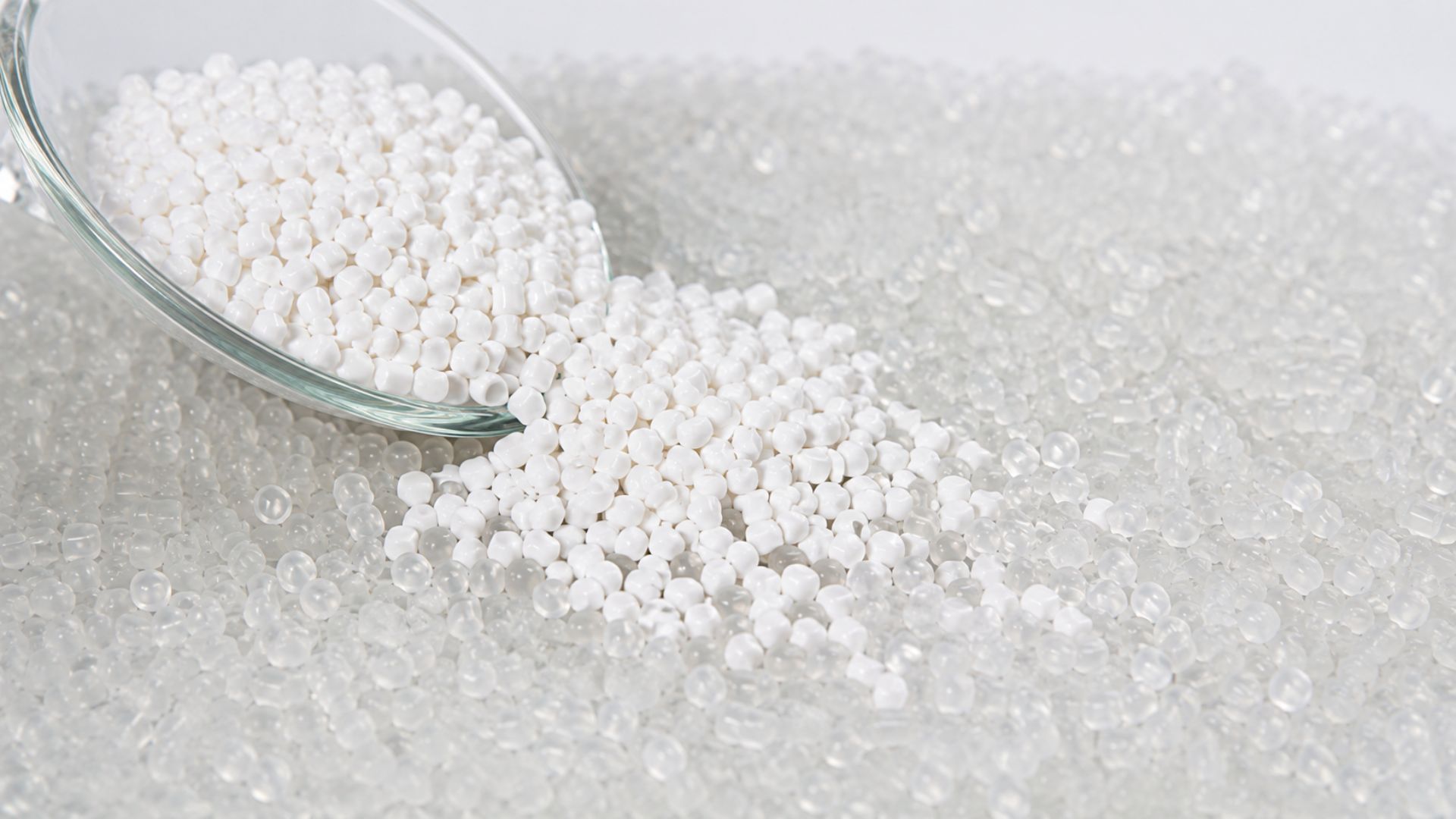
Masterbatch for extrusion is a pelletized concentrate containing a high proportion of colorants, fillers, or additives in a compatible carrier resin. It is blended with virgin resin, recycled resin, or a polymer compound before the mixture enters the extruder.

A typical formulation includes an active component, a carrier polymer, and processing ingredients. The active component provides color, UV resistance, lower friction, flame retardancy, or higher stiffness. The carrier transports it into the base polymer, while dispersants, waxes, stabilizers, or lubricants support mixing and processing.
Because the active ingredients are already incorporated into pellets, manufacturers can dose them more accurately than loose powders. This also reduces dust, contamination, material loss, and direct operator exposure.
Why Masterbatch Is Essential In Extrusion?
Formulation consistency is critical. Any variation in colorant, filler, or additive concentration may appear as streaks, weak areas, rough surfaces, unstable dimensions, or inconsistent mechanical performance.
Masterbatch for extrusion reduces these risks by delivering active ingredients in a uniform and easy-to-feed form. It also simplifies production. Instead of weighing several pigments or additives separately, processors can use one standardized concentrate or a small number of concentrates.
This approach improves repeatability between shifts, machines, production batches, and factories. It is especially important for products with strict technical requirements, including packaging film, pressure pipe, cable insulation, construction profiles, and food-contact sheet.
How Masterbatch Works During The Extrusion Process
The masterbatch is dry-blended or metered with the base resin before entering the hopper. Inside the extruder, the screw transports, heats, and mixes the materials. As the carrier and base resin melt, pigments, mineral particles, or additives are released into the polymer matrix. Screw shear, temperature, residence time, and mixing elements determine dispersion.
Dispersion and distribution are related but different. Dispersion describes how well particle agglomerates are broken down. Distribution describes how evenly the masterbatch is spread throughout the melt. A correct average dosage can still produce defects if particles remain poorly dispersed.
The mixed melt passes through a screen pack and dies before cooling. In blown film, it forms an inflated tube, while in pipe extrusion, it enters an annular die and calibration system. In sheet extrusion, it is flattened and cooled on rollers. For this reason, masterbatch for extrusion can affect melt pressure, flow stability, die deposits, cooling behavior, surface quality, and final dimensions.
Types Of Masterbatch Used In Extrusion
Color Masterbatch
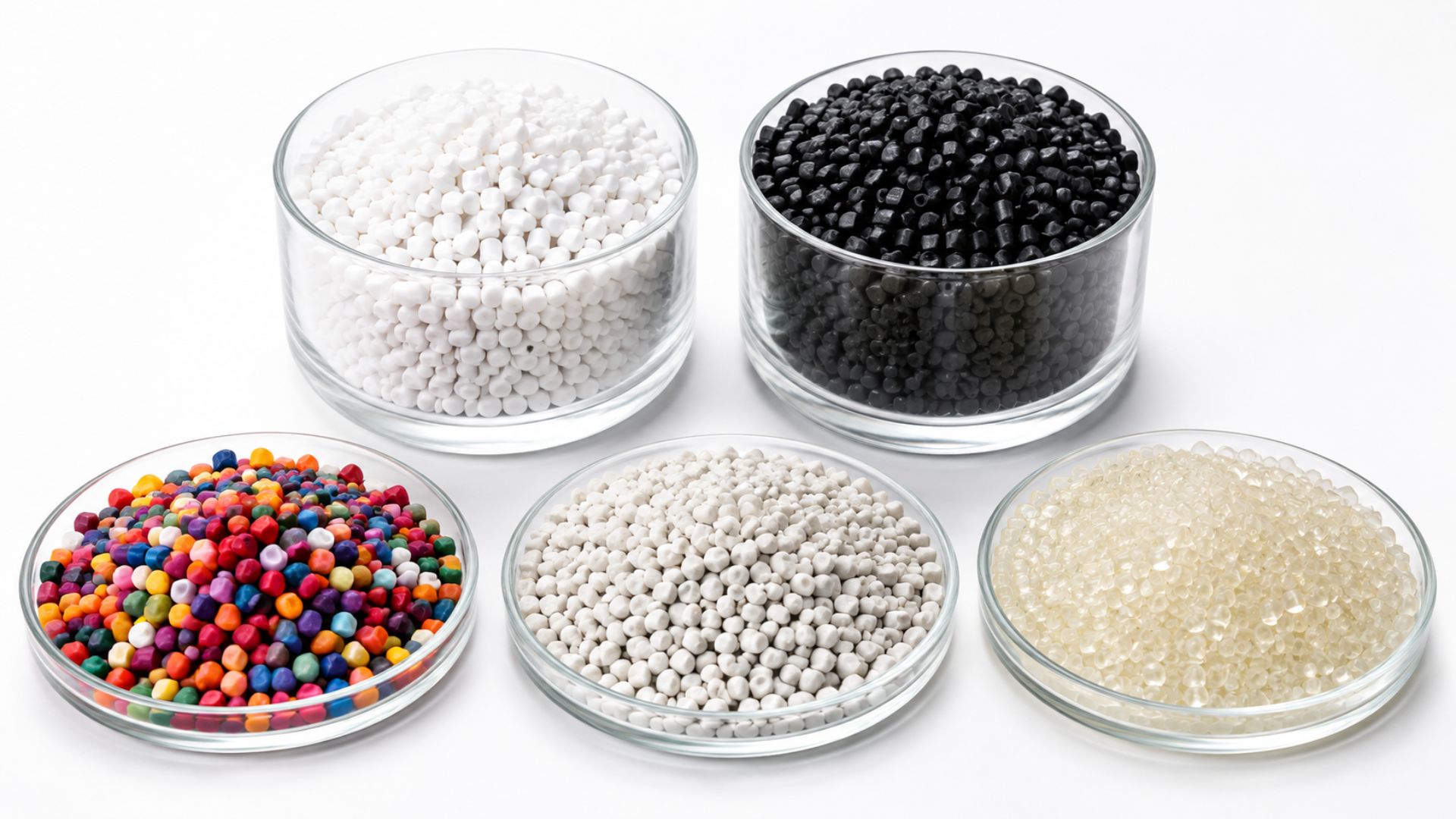
Color masterbatch contains organic pigments, inorganic pigments, dyes, or combinations of colorants dispersed in a carrier resin. It is used to create a specific shade, opacity, brightness, or visual effect.
The pigment must withstand extrusion temperature and shear without changing color or degrading. It must also be finely dispersed to prevent streaks, specks, uneven transparency, and local weakness.
Carrier compatibility is important. An incompatible carrier may cause poor mixing, surface defects, delamination, or reduced mechanical strength. Selection may also depend on lightfastness, weather resistance, migration behavior, food-contact status, and product thickness.
White Masterbatch
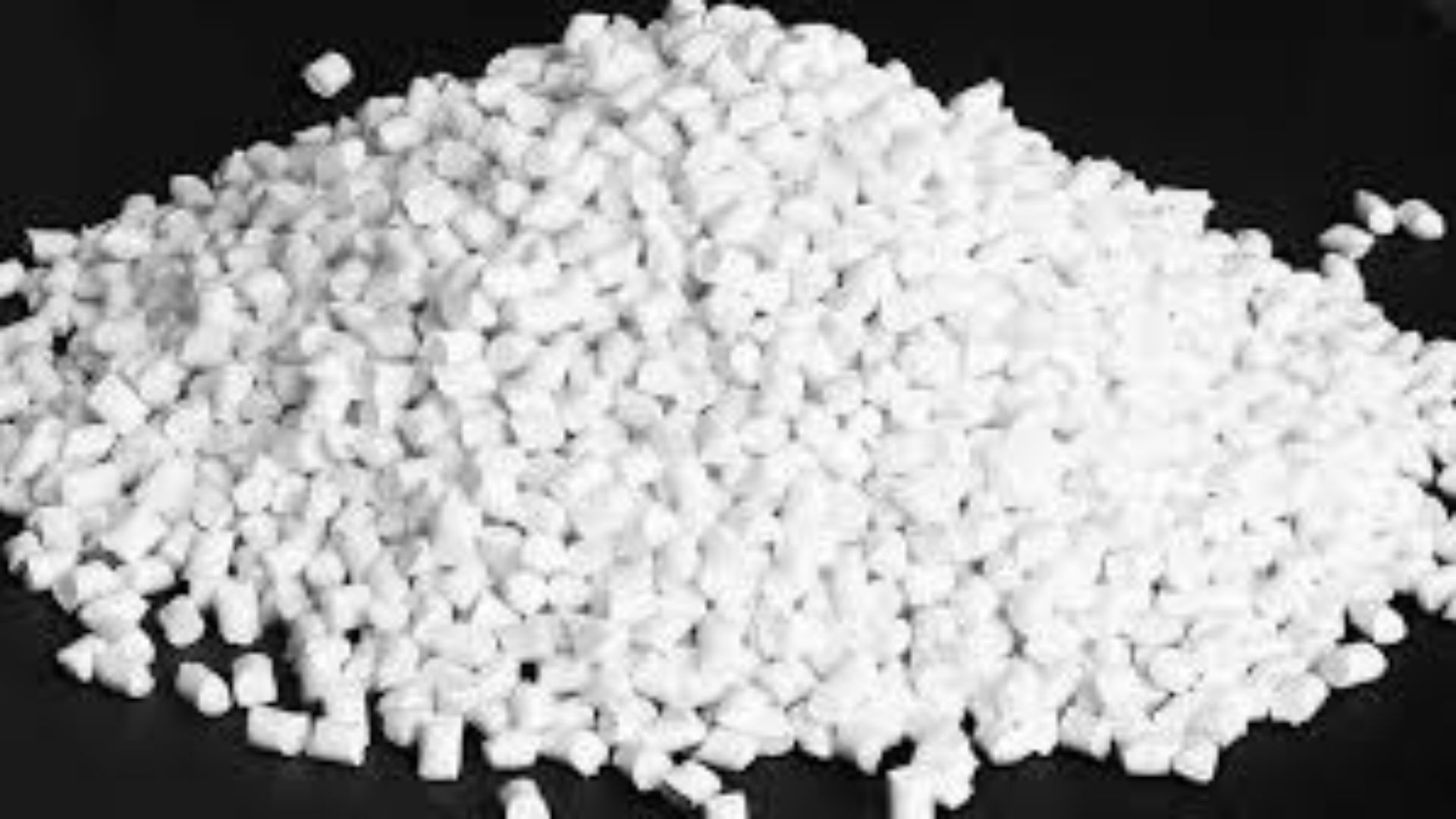
White masterbatch is normally based on Rutile Titanium dioxide because of its strong opacity, brightness, and weather resistance. Other minerals or additives may be included to control cost, tone, processing, or surface appearance.
It is widely used in films, sheets, pipes, profiles, cables, and packaging. Thin products require good dispersion because titanium dioxide agglomerates may create visible spots, gels, or weak areas.
Performance depends on Titanium dioxide grade, surface treatment, carrier resin, moisture control, and compounding quality. Poor formulations may increase die build-up, cause yellowing, reduce gloss, or produce uneven whiteness.
Black Masterbatch
Black masterbatch normally contains carbon black. It is used for coloration, opacity, UV screening, and sometimes electrical conductivity.
Carbon black particle size, structure, purity, and concentration affect both processing and final performance. Fine particles provide high color strength and effective UV protection, but are difficult to disperse. Poor dispersion may increase filter pressure, create surface defects, and weaken the product.
Conductive black masterbatch requires careful formulation because electrical resistance depends on the formation of a continuous carbon black network.
Calcium Carbonate Filler Masterbatch
Calcium carbonate filler masterbatch contains a high level of finely Ground calcium carbonate dispersed in a polymer carrier. It is mainly used in polyolefin film, sheet, pipe, profile, raffia, and related products.
Its main purpose is often to replace part of the polymer and reduce material cost. However, Calcium carbonate can also improve stiffness, dimensional stability, opacity, printability, heat transfer, and cooling speed.
Its effect depends on mineral purity, particle size distribution, surface treatment, moisture level, carrier resin, and loading rate. Excessive filler or poor dispersion can reduce impact strength, elongation, tear resistance, and surface quality.
Calcium carbonate masterbatch for extrusion should therefore be treated as an engineered material rather than simply a low-cost filler. The optimum grade and dosage must reflect product thickness, line speed, mechanical requirements, and acceptable density.
Additive Masterbatch
Additive masterbatch contains functional ingredients that modify processing or end-use behavior.
UV masterbatch combines light stabilizers, UV absorbers, and antioxidants to slow polymer degradation caused by sunlight. It is used in agricultural film, outdoor pipe, profiles, cables, and products stored outside.
Slip masterbatch lowers surface friction, especially in film. It improves winding, bag opening, packaging speed, and handling. Its effect depends on additive chemistry, dosage, storage time, temperature, and interaction with printing or lamination.
Anti-block masterbatch reduces adhesion between film layers by creating microscopic surface roughness. Excessive use can reduce clarity, gloss, or sealing performance.
Antistatic masterbatch limits static charge accumulation. It can improve dust resistance, handling, and safety. Some systems depend on surface migration and ambient humidity, while permanent systems use conductive or polymeric components.
Flame-retardant masterbatch reduces ignition or flame spread. It is used in cables, construction sheets, profiles, and technical products. The formulation must match the polymer and the required fire standard because flame retardants may change density, color, strength, and processing behavior.
Processing-aid masterbatch improves melt flow, reduces die build-up, lowers extrusion pressure, or eliminates defects such as melt fracture. Fluoropolymer-based processing aids are commonly used in polyolefin film, while other systems improve lubrication, release, or dispersion.
How Masterbatch Improves Extrusion Performance
Better Color Consistency
One major purpose of masterbatch for extrusion is to maintain stable color over long production runs. Because pigments are pre-dispersed, they can be distributed more consistently than dry pigment added directly to the machine.
For demanding products, color should be evaluated with objective measurements such as Lab* values, color difference, whiteness, opacity, and gloss rather than visual inspection alone.
Improved Dispersion
Pigments, carbon black, minerals, and some additives naturally form agglomerates. During masterbatch production, compounding equipment breaks these agglomerates down and wets the particles with the carrier resin.
Good dispersion reduces specks, streaks, rough surfaces, and weak points. It also improves color strength, opacity, UV protection, conductivity, and additive efficiency.
Dispersion is especially important in thin film, cable insulation, narrow monofilament, and smooth sheet. A small agglomerate that is harmless in a thick molded part may become a serious defect in a thin extruded layer.
Enhanced Processing Efficiency
Masterbatch can simplify dosing, reduce raw-material handling, improve cleanliness, and shorten production changes. Certain formulations may also stabilize pressure, increase output, accelerate cooling, or reduce die deposits.
Calcium carbonate can increase thermal conductivity and support faster cooling in some products. Processing aids may lower die pressure or reduce melt fracture. Lubricant systems can improve flow through complex dies.
These effects are line-specific. A formulation that improves output on one extruder may create excessive pressure or insufficient melt strength on another. Production trials should therefore reflect the actual screw, die, filter, temperature profile, and line speed.
Improved Mechanical And Surface Properties
Masterbatch for extrusion can modify stiffness, toughness, tensile strength, elongation, tear resistance, gloss, opacity, friction, and texture.
Mineral fillers normally increase stiffness and dimensional stability but may reduce impact strength or elongation. Nucleating agents can increase rigidity by changing crystallization. Slip and anti-block additives change surface behavior, while processing aids can improve smoothness.
Cost Optimization
Cost optimization may result from lower waste, stable output, simpler formulation management, and partial polymer replacement with mineral filler. The cheapest grade is not always the most economical because it may require a higher dosage, reduce line speed, increase cleaning, or produce more scrap.
Evaluation should include dosage, output, energy use, downtime, density, mechanical performance, and finished-product yield.
Applications Of Masterbatch In Extrusion

Blown Film and Cast Film
Film extrusion is highly sensitive to moisture, gels, agglomerates, and surface defects. Masterbatch is used to control color, opacity, slip, anti-blocking, UV resistance, antistatic performance, and processing stability.
Blown film requires enough melt strength to maintain a stable bubble. Cast film often has strict optical and surface requirements. In both cases, the carrier and additives must not interfere with printing, lamination, sealing, or food-contact compliance.
Pipe Extrusion
Pipe extrusion uses masterbatch for color, UV protection, identification stripes, and processing control. Black masterbatch is widely used in outdoor polyethylene pipe because properly dispersed carbon black provides effective UV screening.
Pressure pipe requires strict long-term performance, so masterbatch compatibility and dispersion are critical. Poorly dispersed particles can create weak points, while an incompatible carrier may reduce welding quality or stress-crack resistance.
Filler masterbatch may be used more widely in drainage pipe, conduit, and other non-pressure applications, provided dimensional and impact requirements are maintained.
Sheet and Board Extrusion
Sheet and board extrusion uses masterbatch to adjust color, opacity, stiffness, flame behavior, UV resistance, and surface appearance. Applications include packaging sheets, trays, signage, furniture boards, and construction panels.
Profile Extrusion
Profile extrusion produces window components, trims, trunking, furniture edges, and other complex shapes. Because flow must remain balanced through the die, masterbatch for extrusion must have suitable rheology and thermal stability.
Wire and Cable Extrusion
Cable insulation and sheathing are often thin and must remain free from contamination and agglomerates. Color masterbatch is used for identification, while black grades can provide UV protection.
Flame-retardant, low-smoke, conductive, antistatic, and processing-aid concentrates may also be used. The system must meet electrical, thermal, mechanical, and fire requirements.
Raffia and Monofilament
Raffia and monofilament extrusion is used for woven sacks, ropes, twines, nets, brushes, and artificial grass. These materials are highly stretched, so pigment or filler agglomerates may cause filament breaks.
Color, UV, filler, and processing-aid masterbatches are common. For outdoor applications, UV stability is essential. In woven tapes, filler can improve stiffness and reduce cost, but excessive loading may reduce tensile strength, sewing performance, and drawability.
Choosing The Right Masterbatch For Extrusion
Match The Resin
The carrier should be compatible with the base polymer. Polyethylene carriers are commonly used in polyethylene applications, while polypropylene products generally perform best with polypropylene or compatible polyolefin carriers.
Carrier mismatch may cause phase separation, surface defects, unstable flow, weak welding, or reduced strength. Melt viscosity also matters. A carrier that flows much faster or slower than the base resin may distribute unevenly.
Evaluate Dispersion Quality
Dispersion should be assessed in conditions similar to the final process. Film producers may use gel counts, filter-pressure tests, or microscopy. Pipe and cable producers may use carbon black dispersion tests, surface inspection, and mechanical testing. Masterbatch for extrusion should not be judged only by a thick molded color plaque. A grade that appears acceptable in a thick sample may fail in thin film or fine cable coating.
Consider Melt Flow Index (MFI)
The MFI of the carrier should be reasonably compatible with the base resin and process. A very high MFI grade may disperse quickly but reduce melt strength. A very low MFI grade may be difficult to distribute in short or low-shear extruders. MFI is only a screening tool because polymers with similar values can have different rheological behavior. However, it remains useful when comparing possible grades.
Ensure Thermal Stability
Pigments and additives must withstand the actual processing temperature and residence time. Degradation may cause color shift, odor, gas formation, plate-out, loss of function, or damage to the polymer. The evaluation should include normal operating conditions, temperature overshoot, shutdown periods, and long residence times in large dies or profile tools.
Optimize Dosage
The dosage should be high enough to achieve the target function but not higher than necessary. Too little may result in weak color, poor UV protection, or uneven additive performance. Too much may increase cost, change flow, reduce mechanical properties, or cause blooming and die deposits.
Trials at several additional levels are useful. The final dosage should provide a practical processing window rather than working only at one narrow setting.
Check Regulatory and End-Use Requirements
The selected grade must comply with standards for the final product. Food packaging, drinking-water pipe, toys, cables, automotive parts, and construction products may have different restrictions on pigments, heavy metals, migration, odor, recycled content, fire behavior, or chemical resistance.
The operating environment is also important. The correct masterbatch for extrusion must satisfy both processing conditions and long-term service requirements.
Conclusion
Masterbatch is essential for modern extrusion. It ensures consistent color, reliable additive performance, and stable processing across long production runs. From blown film and pipe to sheet, profile, cable, and raffia, the right masterbatch supports a wide range of applications while improving quality, efficiency, and cost control. Selecting a properly grade remains the most effective way to achieve consistent results and long-term production stability.